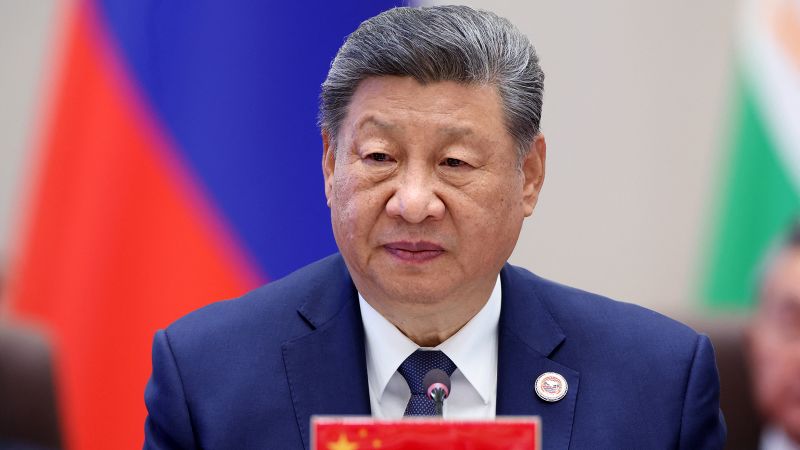
United States President Donald Trump recently welcomed Chinese President Xi Jinping to the White House for a high-profile state dinner, marking a pivotal moment in the diplomatic calendar. The event brought together political leaders and titan figures from the American technology sector to discuss the trajectory of the world’s most influential bilateral relationship. Amid a backdrop of historical reflections and future-facing technological ambitions, the summit aimed to find common ground between the two global superpowers.
What happened
The state dinner, held in the East Room of the White House, featured a guest list that underscored the intersection of geopolitics and industry. High-profile attendees included Nvidia’s Jensen Huang and Tesla CEO Elon Musk, highlighting the central role that technology plays in the current US-China dynamic. During the evening, President Trump offered a glimpse into the future of the White House itself, inviting guests to view the ongoing construction of a new, massive ballroom intended to accommodate larger international gatherings in the coming years.
President Xi Jinping used his address to bridge the historical gap between the two nations. He invoked several centuries of shared history, ranging from George Washington’s personal interest in Chinese art to the military alliance between the two countries during World War II. Xi specifically cited the 1972 meeting between Richard Nixon and Mao Zedong as the foundational moment for modern relations. In a notable rhetorical move, Xi suggested that President Trump’s “Make America Great Again” initiative could exist in harmony with China’s own goals for “national rejuvenation,” calling for a “new approach” where both major powers act as responsible global stewards.
Context
This gathering represents the second face-to-face summit between Trump and Xi this year, following a previous meeting in Beijing. However, its significance is heightened by the fact that it marks Xi’s first visit to the American capital in over a decade. The visit comes at a time when the two nations are navigating a complex web of economic and security challenges.
On the agenda for this summit were critical discussions regarding the development and regulation of Artificial Intelligence (AI), an area where both nations are competing for dominance. Beyond technology, the leaders are grappling with traditional points of friction, including trade imbalances, the status of Taiwan, and the broader implications of the ongoing conflict in Iran. These discussions occur against a backdrop of long-standing economic rivalry and a mutual desire to define the “rules of the road” for the 21st century.
Why it matters
The relationship between the United States and China is widely regarded by analysts as the most consequential partnership in the world. Decisions made during these summits have ripple effects that influence global markets, technological standards, and international security. The presence of AI innovators like Huang and Musk at the dinner signals that the “tech war” and potential collaboration on safety standards are now as vital to diplomacy as traditional military or trade agreements.
Despite the optimistic tone of the speeches and the shared calls for cooperation, the path forward remains fraught with difficulty. Deep-seated mistrust continues to permeate both administrations, and experts remain skeptical that a single summit can resolve systemic disagreements over trade and regional security. However, the move to maintain open lines of communication suggests a mutual recognition that even as rivals, the two largest economies must find a way to coexist to ensure global stability. As Xi noted, the history between the two nations continues to flow like a river, and both leaders are currently attempting to steer that current toward a more predictable future.