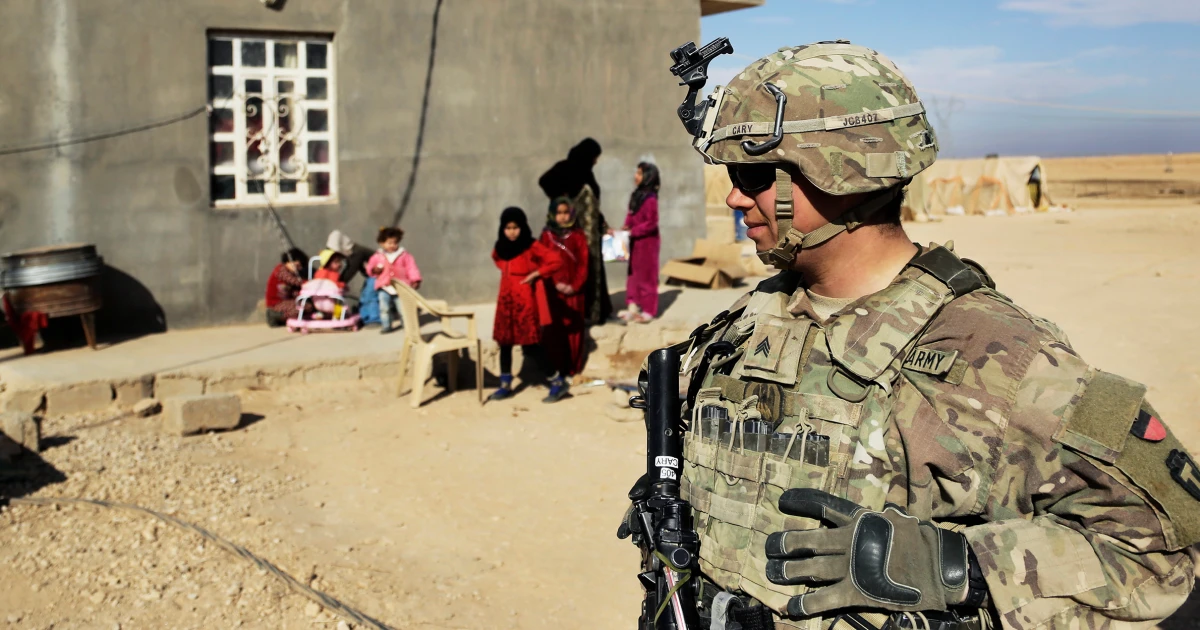
The United States has officially concluded its long-standing military mission against the Islamic State in Iraq, marking the end of a combat era that reshaped the Middle East. While the departure is being hailed as a triumph by some leaders, it has simultaneously ignited deep-seated anxieties regarding the potential for a power vacuum and the growing shadow of Iranian influence in the region.
What happened
The last American units assigned to the anti-ISIS campaign departed Iraq on Wednesday, signaling the formal end of a mission that successfully dismantled the group’s territorial hold. President Donald Trump characterized the exit as a “decisive victory,” asserting that the terrorist organization’s self-styled caliphate has been thoroughly destroyed. This withdrawal follows a strategic timeline established during the Biden administration, moving forward despite the fact that the regional security landscape has shifted significantly since the plan was first conceived.
In Baghdad, Iraqi Prime Minister Ali al-Zaidi celebrated the transition during a formal handover ceremony. He framed the moment as a milestone for national sovereignty and the maturation of Iraq’s own security institutions, signaling a new phase of independent decision-making and balanced international partnerships.
Context
The U.S.-led intervention, known as Operation Inherent Resolve, launched in 2014 during a period of extreme crisis. At its peak, ISIS controlled nearly 40% of Iraqi territory and a third of Syria, governing millions through a brutal “caliphate.” Over the subsequent 12 years, a coalition of international and local forces stripped the group of its land and decimated its leadership.
However, current intelligence suggests that while the “organized military threat” is gone, the group is not entirely extinct. Recent United Nations monitoring reports indicate that several hundred fighters remain active across various Iraqi provinces. These remnants currently operate out of remote desert areas, sustaining themselves through the extortion of local farmers. While the Pentagon maintains that these fighters are currently incapable of sophisticated large-scale operations, their persistence remains a point of concern for regional observers.
Why it matters
The departure comes at a precarious time for Middle Eastern stability. Kurdish officials in northern Iraq have expressed significant alarm, noting that the withdrawal leaves them vulnerable to external aggression and lacks a clear plan for air defense. This anxiety is rooted in recent escalations; the Kurdish Peshmerga Ministry reported that more than 1,000 ballistic missiles have been fired at their territory by Iran since early this year, leading to civilian deaths and property destruction.
There is a palpable fear that the absence of U.S. troops will create a vacuum that Tehran-backed militias will move to fill. These proxies have already been seen celebrating the American exit, viewing it as an opportunity to expand their influence over Iraqi politics and security. Furthermore, critics of the timing argue that a premature withdrawal could allow ISIS remnants to regroup, mirroring the instability that followed previous troop reductions in the region. The coming months will serve as a critical test of whether Iraq’s sovereign forces can maintain order and resist external pressure without direct American military support.