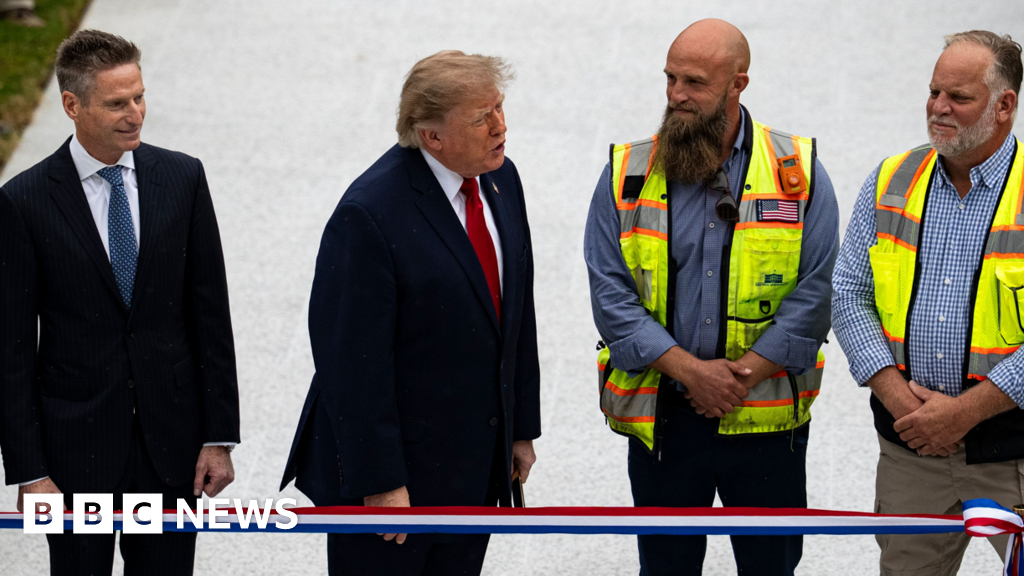
When President Donald Trump stepped out to unveil a new helipad at the White House this past Monday, the resulting footage was far from the polished broadcast typical of presidential events. The President’s remarks were nearly impossible to hear, obscured by ambient noise and the lack of professional audio equipment. This technical failure was not a coincidence; it was the first visible consequence of a deepening conflict between the executive branch and the news organizations tasked with covering it.
What happened
The current standoff reached a breaking point following the administration’s decision on Friday to bar several high-profile news outlets—including CNN, Politico, and MS NOW—from attending White House events. President Trump defended the move by accusing these organizations of disseminating “fake news” and “fictions” regarding his administration. By the following day, the rhetoric turned into physical exclusion as reporters from the targeted outlets found their White House security credentials had been deactivated.
In a rare show of solidarity, the five major television networks that constitute the White House TV pool—CNN, ABC, CBS, Fox News, and NBC—responded by withdrawing their services. This collective boycott meant that for events like Monday’s helipad unveiling, the standard professional camera crews and audio technicians who usually document the president’s every move were absent. Consequently, much of the national media was left without visual or audio records of the event, and those that did broadcast it provided the public with substandard, barely audible footage.
Context
To understand the gravity of this dispute, one must understand the function of the White House press pool. Established decades ago, the pool system is a pragmatic arrangement designed to manage the logistical challenges of presidential coverage. Because it is physically impossible for hundreds of global news outlets to fit into the Oval Office or onto Air Force One, a small, rotating group of “pool” reporters and technicians represents the entire press corps.
This group is divided into categories for print, radio, photography, and television. The five members of the television pool share the costs and responsibilities of capturing footage, which they then distribute to the wider media landscape. The pool is intended to be on constant standby, ensuring that if the president needs to address the nation or if an emergency occurs, a record is always being made. By banning specific members and prompting a boycott from the rest, the administration has effectively disrupted a system that has served as a primary link between the presidency and the public for generations.
Why it matters
The implications of this row extend far beyond a single muffled speech at a helipad. At its core, the dispute raises significant constitutional questions regarding the First Amendment and the right of a free press to operate without government interference or retaliation. When an administration begins selecting which journalists are permitted to cover public events based on the nature of their reporting, it sets a precedent that critics argue undermines democratic accountability.
Furthermore, the breakdown of the pool system threatens the historical record. Without a functional, professional press pool, the daily activities of the presidency may go undocumented or be recorded with such poor quality that they become useless for public consumption. As tensions continue to simmer—evidenced by the President’s recent verbal attacks on reporters during the UN General Assembly—the future of presidential media coverage remains uncertain. This dispute suggests a fundamental shift in how the American public receives information about its leader, potentially leading to a more fragmented and less transparent era of political reporting.