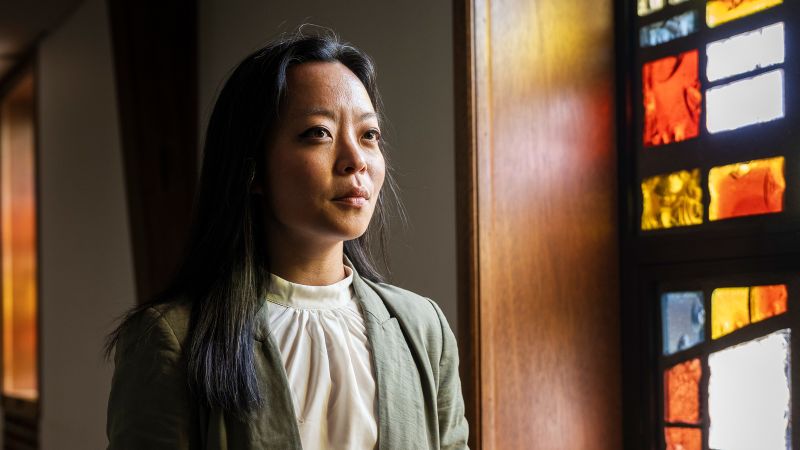
Wisconsin, a perennial battleground state known for its razor-thin election margins, is becoming the ultimate testing ground for the American progressive movement. State Assemblywoman Francesca Hong, a self-identified democratic socialist, has emerged as the commanding frontrunner in the Democratic primary to succeed outgoing Governor Tony Evers. Her rise represents a significant shift in the party’s traditional strategy as it prepares to defend the executive mansion in a state that often dictates the national political climate.
What happened
The landscape of the Wisconsin gubernatorial primary shifted dramatically throughout July, leaving Hong with a clear path to the nomination. Initially a crowded field, Hong’s top competitors saw their campaigns falter in rapid succession. Lieutenant Governor Sara Rodriguez exited the race following a campaign finance scandal, and shortly thereafter, former Lieutenant Governor Mandela Barnes suspended his bid.
In an effort to provide a more moderate alternative, centrist Democrats and allies of Governor Evers have attempted a late-stage mobilization around David Crowley. The Milwaukee County Executive briefly dropped out of the race in early July only to re-enter ten days later. However, political analysts and even Crowley’s own supporters concede that Hong holds a formidable lead heading into the August 11 primary. The winner is expected to face Republican U.S. Representative Tom Tiffany in a high-stakes November general election.
Context
A 37-year-old representative from Madison, Hong brings a non-traditional background to the race. Before entering politics, she worked in the service industry, rising from a line cook to a successful chef and restaurant co-owner. This background as a small business owner is a central part of her identity, though her policy positions remain firmly on the left.
Her platform has already become a focal point for Republican attacks. Congressman Tiffany has skipped the primary rhetoric to focus directly on Hong, attempting to tie her to the most controversial elements of the Democratic Socialists of America (DSA) platform. Specifically, the GOP is targeting her past comments regarding “defunding the police” and her previous associations with groups that advocate for the abolition of the U.S. Senate and Immigration and Customs Enforcement (ICE).
Hong has responded by attempting to define her own brand of socialism, distancing herself from the national DSA organization. During recent debates, she emphasized that she is “not here to govern by slogan” and argued that her approach to governance is pragmatic. She has also pivoted the public safety conversation, accusing the Republican-led state legislature of being the party that truly “defunded” law enforcement by consistently cutting state aid to local municipalities.
Why it matters
The Wisconsin race is a high-stakes experiment in political science. For years, the prevailing wisdom has been that “swing state” candidates must move toward the center to capture moderate and independent voters. Hong’s candidacy challenges this notion, testing whether a candidate from the ideological “insurgency” can build a winning coalition in a polarized, statewide contest.
Furthermore, this election serves as a barometer for the Democratic Party’s internal identity. Following progressive victories in deep-blue urban districts, the movement is now looking to prove its viability in the Rust Belt. Party leaders are watching closely, as the results in Wisconsin—along with key races in Michigan—will likely influence the party’s platform and recruitment strategies for the 2028 presidential cycle. If a democratic socialist can win in a state as competitive as Wisconsin, it would signal a profound shift in the American political landscape.